

EV Battery Testing: Methods, Safety, and Performance
Introduction to EV Automotive Battery Testing
As the automotive industry transitions toward complete electrification, automotive battery testing has evolved from basic 12-volt auxiliary checks into complex, multidisciplinary validation programs for high-voltage (HV) energy storage systems. Modern electric vehicle (EV) battery packs operate at nominal potentials ranging from 400V to 800V and above, requiring rigorous characterization across cell, module, and pack architectures. Excel Engineering provides comprehensive EV powertrain and high-voltage battery test solutions that help original equipment manufacturers (OEMs) and Tier-1 suppliers validate safety, durability, and performance under extreme operational conditions.
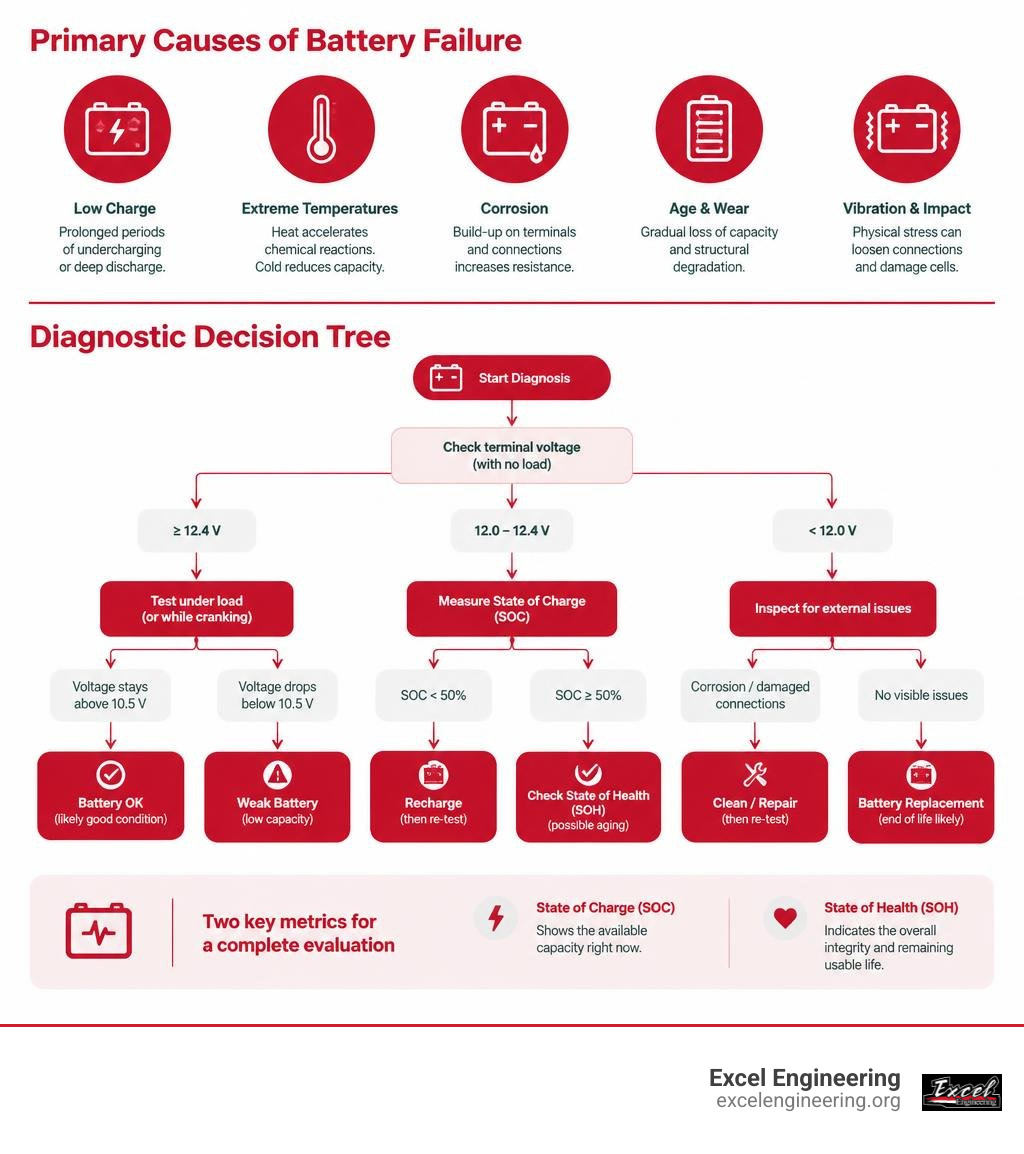
Thorough EV automotive battery testing evaluates both electrochemical efficiency and mechanical resilience. Engineers must analyze State of Charge (SOC) and State of Health (SOH) alongside degradation mechanisms such as active material loss, thermal runaway vulnerability, and impedance growth throughout the pack lifecycle.
Critical EV Battery Degradation and Failure Indicators
High-voltage traction batteries undergo complex electrochemical and thermal stresses during rapid charge-discharge cycles. Identifying early degradation mechanisms is essential for engineering reliable, high-performance battery systems.
Electrochemical Degradation and Capacity Loss
Unlike traditional low-voltage systems, degradation in high-voltage lithium-ion traction packs manifests across interconnected electrochemical pathways:
- Loss of Lithium Inventory (LLI): Continuous solid electrolyte interphase (SEI) growth on the anode traps active lithium ions, causing irreversible capacity fade over successive drive cycles.
- Loss of Active Material (LAM): Structural strain from repeated lithium intercalation and deintercalation causes electrode micro-cracking and detachment, diminishing total energy throughput.
- Impedance Growth and Ohmic Resistance: Cell aging increases internal electrical resistance, elevating Joule heating during high-current acceleration and DC fast charging.
Thermal Imbalance and Cell Inconsistency
Thermal management is vital to traction pack health. Temperature disparities between internal modules lead to localized degradation:
- Thermal Gradients: Variations in coolant flow across battery chill plates cause adjacent cells to age at different rates, accelerating imbalance within series-connected strings.
- Electrolyte Decomposition and Gas Generation: Prolonged operation at elevated temperatures triggers solvent oxidation, leading to internal pressure buildup, swelling in pouch or prismatic cells, and risk of localized thermal propagation.
Laboratory Characterization: EIS, Capacity, and Dynamic Cycling

Laboratory characterization quantifies the fundamental electrical and thermal response of cells and modules under simulated real-world conditions.
Advanced Electrochemical Testing Methodologies
Precise EV testing protocols require specialized diagnostic equipment:
- Electrochemical Impedance Spectroscopy (EIS): By applying alternating current across a spectrum of frequencies, test engineers separate charge transfer resistance, SEI resistance, and diffusion kinetics without destructive disassembly.
- Static Capacity and Open-Circuit Voltage Mapping: Controlled constant-current charge and discharge cycles establish baseline energy capacity and correlate resting voltage curves with precise SOC states.
- Coulombic Efficiency Measurement: High-precision cyclers track minute discrepancies between input and output charge, quantifying parasitic chemical side reactions during cycling.
- Dynamic Drive-Cycle Emulation: High-channel battery cyclers subject modules to standardized automotive load profiles, including the Worldwide Harmonised Light Vehicles Test Procedure (WLTP) and US06 drive cycles.
Cell and Module Test Evaluation Matrix
| Test Parameter | Diagnostic Methodology | Engineering Objective |
|---|---|---|
| Internal Resistance | DC internal resistance (DCIR) pulse & EIS | Identify resistive heating and power delivery limits |
| Energy Density | Constant-current discharge testing (C/3, 1C) | Confirm specific energy (Wh/kg) against target range specifications |
| Thermal Generation | Accelerating rate calorimetry (ARC) | Map heat generation rates across operational C-rates |
| Cycle Aging | Accelerated lifecycle testing at controlled temperatures | Predict battery life and validate warranty targets |
Heavy Power Cycling and Dynamic Load Profiles
Static open-circuit measurements cannot capture transient vehicle dynamics. Laboratory cyclers apply multi-kilowatt dynamic loads to evaluate pack behavior.
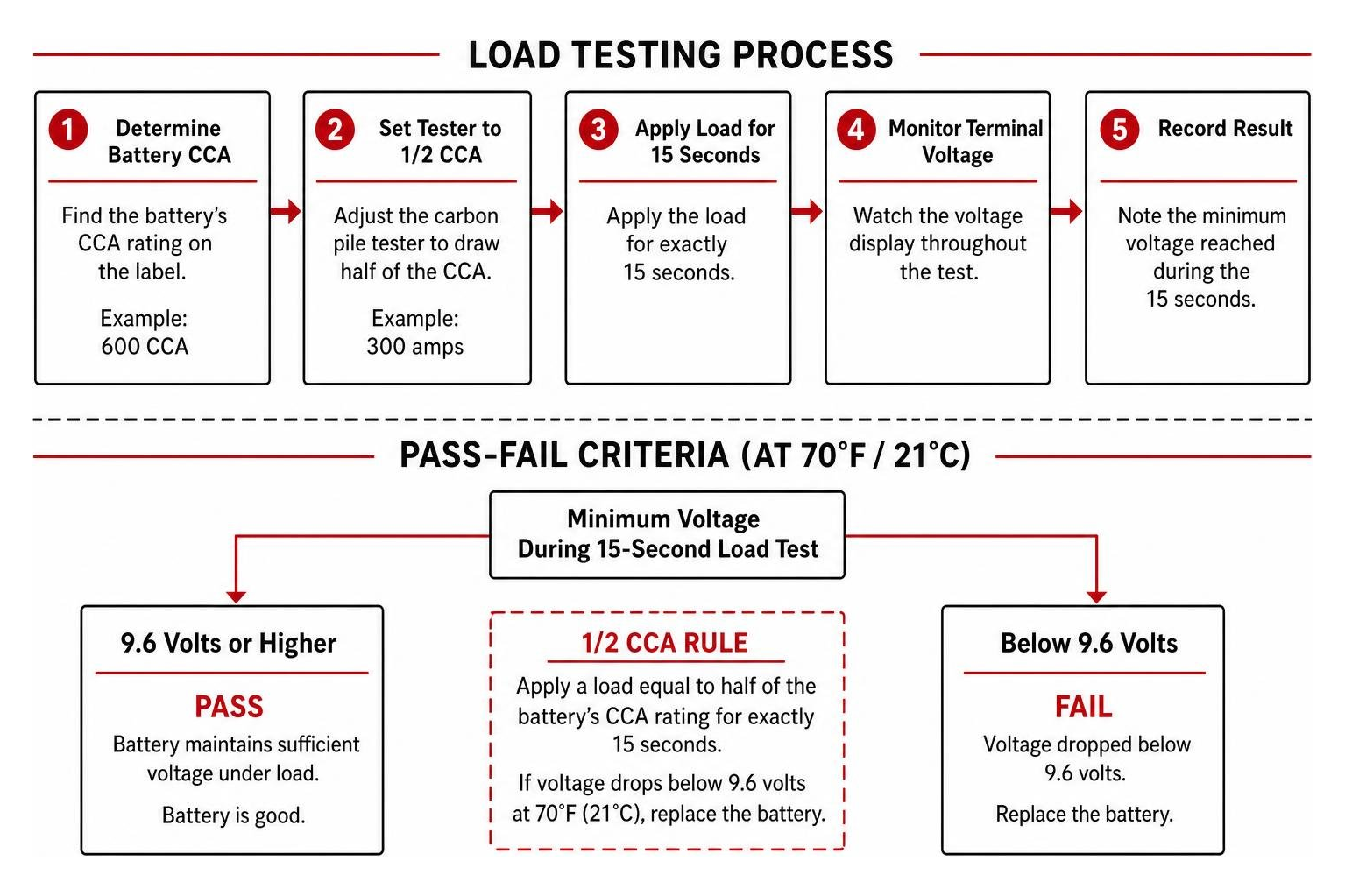
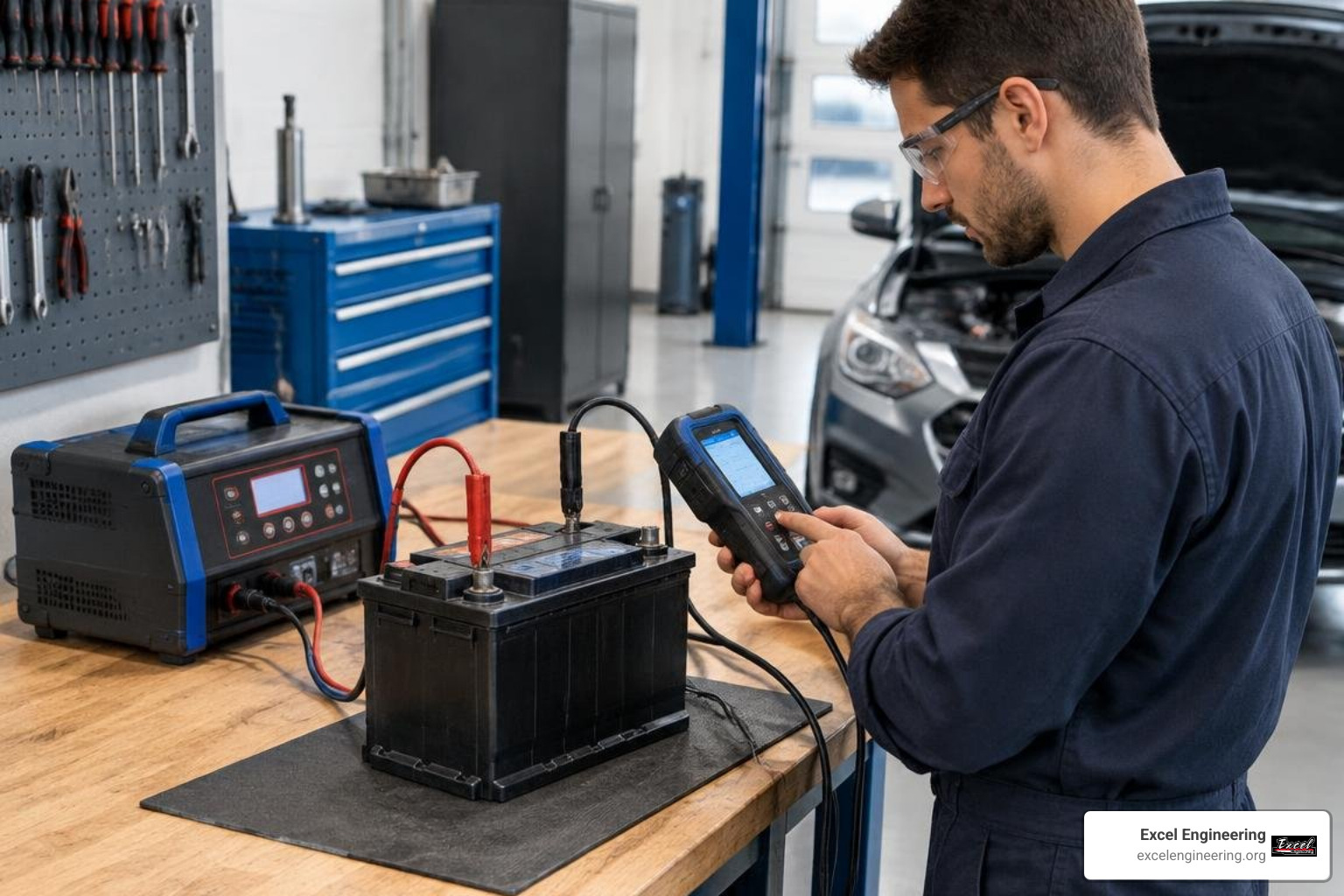
Dynamic load testing subjects the pack to heavy charge and discharge pulses under simulated regenerative braking and peak torque acceleration. Real-time telemetry monitors cell voltages, terminal temperatures, and module balancing to ensure the pack operates reliably within defined voltage and thermal safety envelopes.
High-Voltage Pack, Module, and Powertrain Integration Testing
Comprehensive EV testing requires evaluating how energy storage systems interface with electric drive units, power electronics, and charging infrastructure.
| Assessment Factor | Module-Level Validation | Full Pack & Powertrain Integration |
|---|---|---|
| Primary Scope | Cell balancing, thermal runaway resistance, local busbars | Inverter coupling, DC-DC conversion, full pack BMS communication |
| Thermal Management | Localized fluid cooling and interfacial material testing | Chiller unit performance, pack pressure drop, HVAC integration |
| Power Levels | 5 kW to 50 kW per channel | 100 kW to 500+ kW full pack power |
| Diagnostic Scope | Electrochemical characterization and module SOH | Complete electrical safety, contactor cycling, and regenerative efficiency |
Module and Pack-Level Test Procedures
High-voltage pack testing verifies performance under integrated physical and electrical stresses:
- BMS Hardware-in-the-Loop (HIL) Testing: Emulates cell voltages, thermistor signals, and isolation faults to validate Battery Management System fault detection and contactor control algorithms.
- Isolation and Dielectric Breakdown Testing: Confirms high-voltage safety by measuring insulation resistance between active high-voltage rails and the vehicle chassis ground.
- Busbar and Interconnect Validation: High-current pulse testing verifies that welded module interconnects maintain minimal contact resistance and withstand vibration without micro-fracturing.
When evaluating energy storage alongside internal and auxiliary systems, standard compliance frameworks such as J537_202309: Storage Batteries – Technical Standard provide baseline references for auxiliary storage integration.
Electric Drive and Charging System Integration
High-voltage battery packs must operate seamlessly alongside inverters, e-motors, and onboard charging systems.
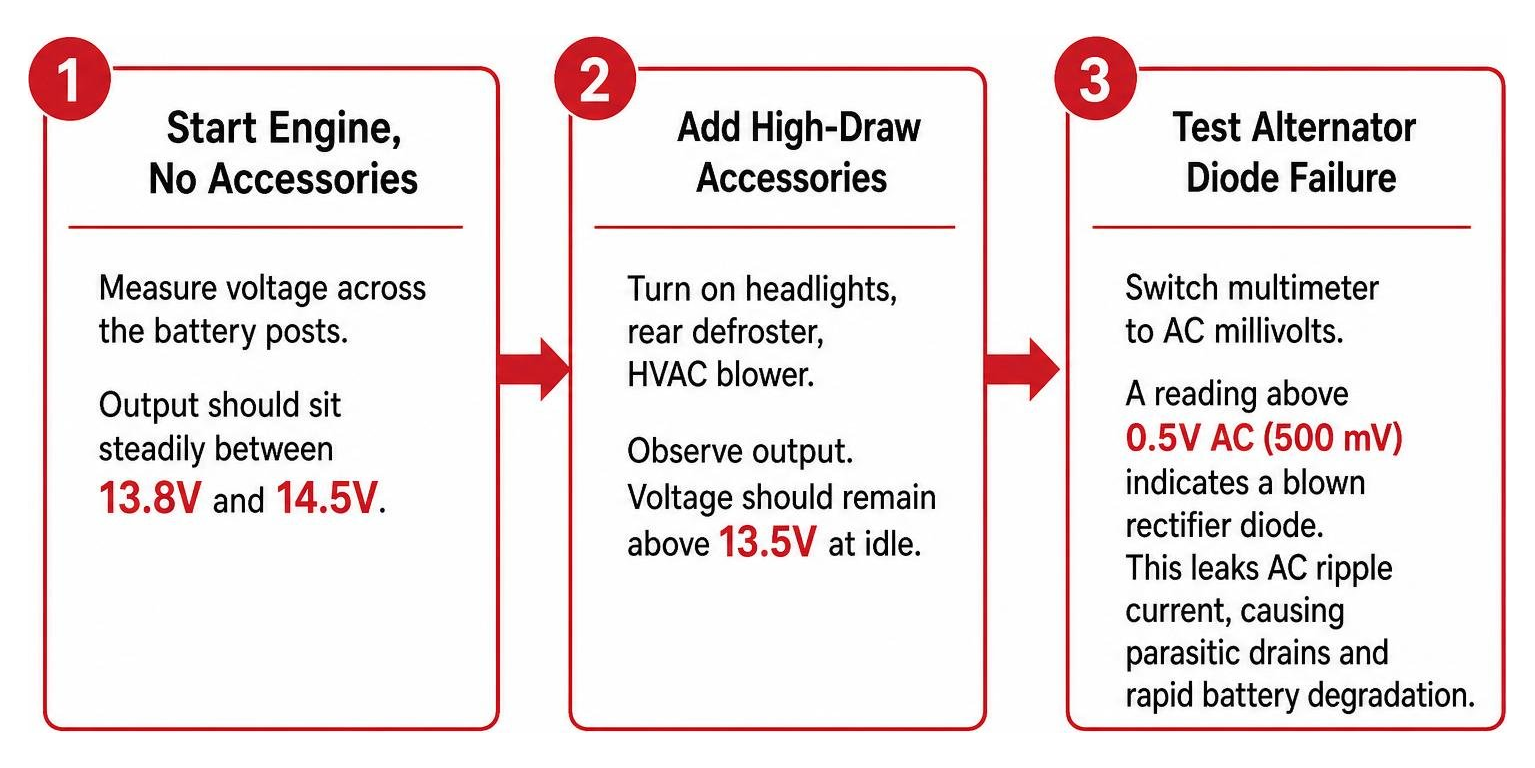
- Dynamometer integration validates power delivery across dynamic vehicle speeds, matching battery discharge rates to electric machine torque demands.
- DC fast charging compatibility testing validates charging rate acceptance, contactor engagement timing, and communication protocols between the off-board charger and vehicle BMS.
- AC harmonic ripple analysis ensures inverter switching frequencies do not introduce harmful current ripples back into the traction pack.
Integrated powertrain validation is an essential discipline at Excel Engineering, where comprehensive powertrain testing evaluates mechanical and electrical components under continuous dynamic loads.
Environmental Simulation, Mechanical Durability, and Safety Protocols
High-voltage traction batteries must operate reliably across diverse climatic zones and endure severe road vibrations without structural or electrical failure.
Environmental and Climatic Simulation
Environmental testing subjects full battery packs to realistic climate cycles inside walk-in environmental chambers:
- Thermal Shock and Cycling: Packs cycle repeatedly between -40°C and 85°C to stress structural seals, cooling line connections, and busbar welds.
- Humidity and Condensation Resistance: High-humidity exposure verifies that internal moisture cannot accumulate to compromise high-voltage isolation resistance.
- Ingress Protection (IP) Testing: High-pressure water spray and submersion testing confirm that pack enclosures prevent moisture ingress under challenging driving conditions.
Mechanical Shock, Vibration, and Sustainable Lifecycle Practices
Automotive traction packs experience continuous mechanical stress over hundreds of thousands of miles:
- Multi-Axis Vibration Testing: Shaker tables simulate road surface irregularities and structural resonances across multi-frequency profiles.
- Mechanical Shock Testing: High-g acceleration impacts evaluate internal structural integrity, module hold-downs, and contactor robustness during curb strikes or rough terrain travel.
Beyond durability validation, developing sustainable energy storage requires closed-loop lifecycle management, battery second-life repurposing, and responsible environmental stewardship across all engineering and manufacturing stages.
Advanced EV and OEM Automotive Battery Testing Standards
As the industry transitions to advanced cell chemistries and higher voltages, comprehensive validation across cells, modules, and complete packs is required by international safety and performance standards.
Engineers developing advanced HV battery systems must evaluate dynamic energy storage characteristics under strict regulatory and OEM specifications. Modern lithium-ion cells exhibit high energy densities and significant power capabilities, requiring validation protocols to account for internal thermal dynamics, self-heating under high C-rates, and electrochemical degradation.
High-Voltage Cell Characterization and EOL Validation in Automotive Battery Testing
OEM development and End-of-Line (EOL) manufacturing rely on standardized testing to evaluate degradation and verify pack assembly integrity before vehicle deployment.
Standardized characterization follows established engineering frameworks:
- Dynamic Capacity and C-Rate Testing: Standards such as the USABC Electric Vehicle Battery Test Procedures Manual define constant-current discharge testing (using rates like C/3 or 1C) alongside dynamic simulation schedules like the Federal Urban Driving Schedule (FUDS).
- Fast Quality Diagnostics: Research into rapid nondestructive-testing techniques for in-line quality control demonstrates that targeted electrochemical impedance spectroscopy (EIS) can evaluate cell health in under one minute, identifying internal defects without lengthy cycling.
- Automated EOL Communication: According to research on the integration strategy of online EOL testing of pure electric vehicle power batteries, automated testing lines use Unified Diagnostic Services (UDS over CAN/ISO 14229) to verify internal relay controls, isolation resistance, and battery management system (BMS) communications.
For OEM development teams, structured EV battery testing for OEMs safety abuse testing and validation confirms module balancing, thermal management efficiency, and lifecycle durability before production release.
Regulatory Compliance and Abuse Testing Standards
Battery safety validation requires rigorous abuse testing defined by international industry standards:
- Safety and Abuse Frameworks: Guidelines outlined in J2464_202108: Electric and Hybrid Vehicle Rechargeable Energy Storage System Safety Testing describe procedures for thermal shock, overcharge, external short-circuit, and mechanical penetration testing to assess thermal runaway risks.
- Harmonized Global Standards: IEC 62660-1 and ISO 12405-1/2 specify continuous and pulse power test procedures across operational temperature envelopes ranging from -30°C to 55°C.
Frequently Asked Questions about EV Battery Testing
What are the main differences between cell-level, module-level, and pack-level testing?
Cell-level testing characterizes fundamental electrochemical properties, capacity, and impedance under precise thermal conditions. Module testing focuses on balancing circuits, thermal interface materials, and series-parallel interconnects. Pack-level testing evaluates complete high-voltage integration, structural rigidity, cooling system flow, BMS software, and safety disconnects.
Why is Hardware-in-the-Loop (HIL) testing critical for EV battery packs?
BMS HIL testing simulates high-voltage voltages, current demands, temperatures, and fault scenarios electronically. This allows engineers to validate safety algorithms, overcurrent protection, and thermal runaway mitigation controls without risking damage to expensive physical hardware.
How do thermal management tests ensure EV pack longevity?
Thermal tests evaluate coolant flow distribution, interfacial heat transfer, and temperature uniformity across every cell. Ensuring balanced thermal dissipation prevents localized hotspots, minimizes differential cell aging, and helps prevent thermal runaway events during high-rate fast charging.
Partner with Excel Engineering for EV Battery Testing
Developing safe, reliable, and compliant electric vehicle platforms requires comprehensive testing capabilities across every stage of development. From initial electrochemical cell characterization to full high-voltage pack environmental durability and abuse validation, structured automotive battery testing ensures traction batteries satisfy stringent OEM and regulatory benchmarks.
Excel Engineering delivers accredited testing programs spanning powertrain, high-voltage battery, dynamometer, and emissions validation. Our test facilities are equipped with high-power cyclers, walk-in environmental chambers, and diagnostic tools to support your engineering programs. Contact our engineering team to collaborate with our dedicated battery testing center for your development, characterization, and compliance testing requirements.